Average Reviews:

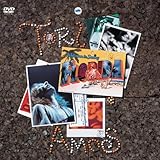
(More customer reviews)The worst that can be said about Tori Amos's live concert DVD, Welcome To Sunny Florida, is that the packaging is somewhat lackluster for a Tori Amos production. Otherwise and more importantly, Welcome To Sunny Florida, which also includes an extensive and remarkably balanced interview with Amos, a briefer backstage interview with her mother, and Scarlet's Hidden Treasures, a bonus CD of six unreleased Scarlet's Walk - era songs, fulfills itself impressively in every way. With Amos's best - of package, Tales Of A Librarian, released as recently as the autumn of 2003, the current collection only strengthens Amos's reputation as an unstoppable artistic juggernaut and workhorse. Amos is among the most prolific recording artists of her generation, and has reached the kind of elevated position today that musicians like Joni Mitchell and Patti Smith enjoyed in the seventies.
The concert footage, culled from the last show in the 2002-2003 Scarlet's Walk tour, represents Amos at her straightforward and ungrandiose best. Unlike some of the earlier such footage the artist has made available, Amos's vocals here are well recorded, high notes are reached with apparent effortlessness, the songs closely resemble the studio originals, and, above all, Amos appears happy, comfortable, and fully in command of the wide range of her talents.
The real importance of the collection, however, is found not on the DVD but on Scarlet's Hidden Treasures; three of the songs-'Seaside,' 'Tombigbee,' and 'Indian Summer'-were made available on the internet after the release of Scarlet's Walk (2002), but 'Ruby Through The Looking - Glass,' 'Bug A Martini,' and 'Apollo's Frock' are entirely new. With the exception of the likable, jazz - based "Bug A Martini," these songs represent Amos at the very height of her creative power. The meditative, somnolent 'Indian Summer' approaches the beauty of 'Cooling,' while the deceptively simplistic 'Seaside,' a fantasia on war that may or may not reference the attack on Pearl Harbor, has the restrained emotional fatalism of 'Playboy Mommy.' Wars both personal and collective underpin these songs thematically.
In the Seventies, songwriters Carole King, Joni Mitchell and Carly Simon mapped out the battleground in the war between the sexes from positions of fairness, self - assurance, and personal power. In many ways, however, Amos's spiritual and lyrical antecedent is really the perpetually combative, confrontational, and caustic Pretenders frontwoman Chrissie Hynde, as a study of Amos' hostility-laden song catalogue attests. Like Hynde, Amos's themes largely reflect emotional and spiritual crisis, chronic dissatisfaction with the state of the world, the victimization of the weak by the powerful, personal disillusionment, and the general failure of communication; like Hynde, Amos often responds with straightforward, finger - pointing accusations of blame, open sarcasm, and abrasive mockery.
But Amos is a more openly feminist and women - centered artist than Hynde, something readily apparent throughout the songs on Scarlet's Hidden Treasures. 'Ruby Through The Looking - Glass' describes the emotional and perhaps physical battles between a man and a pregnant woman; the vulnerable unborn child is, not surprisingly, referred to as "she." The children killed while playing innocently by the ocean in 'Seaside' are "girls dancing." 'Apollo's Frock,' which lyrically resembles the early Imagist poetry of Hilda Doolittle, may be Amos's most overt feminist statement yet; lofty Apollo, and men generally, are reminded that "Apollo, your frock...was always as beautiful as your sister's that your light shined on." The rousing, combustible 'Tombigbee' finds Amos hoping to be cleansed by the river after a volatile romantic encounter, and 'Indian Summer,' which begins with an image of "girls in the attic," finds Amos advocating for "another way" of life in the West and addressing President Bush with unusual subtly.
Amos's women - centered perspective begs the same question that matriarchal - based sects of Wicca do; are imbalances corrected or resolved by replacing a patriarchal worldview with a matriarchal viewpoint? At times, Amos seems at least metaphorically Wiccan in her emotional, spiritual, and political perspective. Her own combative feelings and attitudes seem to provide her with little insight into the identical hostilities she so opposes in others.
Longtime listeners who have missed the piano - dominated songwriting of Under The Pink (1994) and portions of Boys For Pele (1996) will be thrilled with Welcome To Sunny Florida and specifically with Scarlet's Hidden Treasures; 'Ruby Through The Looking Glass,' 'Seaside,' 'Apollo's Frock,' and 'Indian Summer' reveal the "girl at her piano" at her very best, and collectively are leagues beyond the material on From The Choirgirl Hotel (1998) and most of To Venus And Back's studio disc (1999).
Click Here to see more reviews about: Tori Amos: Welcome to Sunny Florida (DVD with Bonus CD in Jewel Case)
TORI AMOS Welcome To Sunny Florida (2004 US 2-disc set comprising of Region 2 PAL DVD featuring 18 classic tracks performed at the final show of her Lottapianos Tour on 4th September 2003 in West Palm Beach Florida and a 6-track CD Scarlets Hidden Treasures which includes B-sides & previously unreleased recordings picture sleeve EVD-58629)


0 comments:
Post a Comment