Average Reviews:

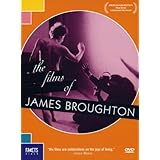
(More customer reviews)Born in 1913 James Broughton was a late-blooming San Francisco poet and filmmaker as well as beatnik, hippie, and gay activist whose work spans the latter three decades of his life (1950's, 1960's and 1970's). His innovation was to blend his spoken word poetry with avant-garde film imagery. Most of his films feature Broughton reading his poetry which has a nursery rhyme playfulness and a be here now zen simplicity that is very much of its time. Many of Broughton's works are whimsical odes to the body. His black and white 1950's films are mainly about free-spirited people who seek liberation through contact with art and nature and each other confronting those who would contain these impulses. These themes reach fruition in his first early success "The Pleasure Garden" for which he won an award at Cannes (presented to him by none other than Jean Cocteau who admired the film). His color 1960's films are populated by lots of nude bodies in motion and are celebratory in spirit. One of the best in this category would be "The Bed" which features a succession of nude individuals, couples, and groups (most of them bohemian) lying on, dancing 'round, and jumping over a bed situated in the bright California outdoors with the calmly luxuriant California Sierras visible in the background. Although Broughton's masterpiece of this middle period would be "Dreamwood" which is a much moodier and trippier piece about a hippie who leaves behind the industrial wastleland of urban Cal and journeys to a mysterious island where he seeks sensual and psychic liberation/release/enlightenment among the fauna and flora and body-spirits of the place. It's an extraordinary trance film (which has affinities with Satyricon and Zabriskie Point).
The trajectory of Broughton's career is the trajectory of his own burgeoning sensuality. Though he seems to have practiced a kind of pan sexuality for much of his life (he had one child with film critic Pauline Kael and another with his wife, Stan Brakhage filmed the wedding) from the mid-seventies onward he made films about male-male culture, relationships, and sensuality. These later films are perhaps more personal (and more graphic) but as a result less accessible to some viewers.
Click Here to see more reviews about: The Films of James Broughton
 Get 10% OFF
Click here for more information about The Films of James Broughton

0 comments:
Post a Comment