Average Reviews:

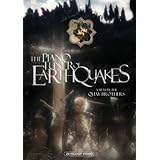
(More customer reviews)The second full length feature by the inimitable Brothers Quay, "Piano Tuner of Earthquakes" defies summary or comparison with other films. It was, I believe, shot on HD but the look in many shots is as delicate and textured as film -- and has live action combined with their trademark puppet based animation. Perhaps the easiest way to suggest the feel and approach of the film is to describe it as operating according to a "dream logic" -- and there is even a great line in the film when the piano tuner is discussing dreams with the doctor's assistant; she says, basically, that to think you can understand the meaning of a dream by interpreting its objects as symbols is like believing you can tell the contents of a letter from the sound of the postman's knock -- with the added qualification that you may in fact decipher something from how loud and how long and how urgently he knocks. Still, this is a direct hint from the filmmakers that there are no simple meanings here. The basic plot can be described with relative ease (and to tell it doesn't give anything away because the film is not really about plot but about textures, rhythms, sounds and movement): a famous opera singer is abducted and murdered on the night before her wedding by the "evil" Dr. Droz, a maker of living mechanical automata, who plans to bring her back to life and incorporate her into his ultimate and final automata, one that will recreate her abduction and death; as collaborators and participants in his project he has several apparently insane gardeners, a jealous assistant who resembles an older version of the opera singer, and a skilled but naive piano tuner who resembles the fiance of the opera singer. What such a "synopsis" fails to capture is the strange ambience and style of the film throughout, and doesn't shed much light on "what it all means." Is the Doctor a kind of god? Or is he like the filmmakers themselves? Is the beginning of the film already part of the automaton? Are the filmmakers comparing the film itself to a kind of self-contained automatic world? What is the meaning of a strange story the Doctor tells about ants and spores, a story whose components figure later in the film? To what extent are we all, insofar as we find ourselves inexplicably driven by passions we didn't choose, like the ants in the story (don't ask, if you watch the film you'll see what I mean)? What is the significance of the final scenes? Lots of questions, and you can certainly come up with some interesting answers if that is your thing -- but if you like your answers hard and fast, or if you like your films straightforward and easy to follow, or if you want to know what is going on at all times, or if you'd be bugged by all the characters for whom English is a second language speaking slowly almost as if under hypnosis themselves, and if you can't just succumb to a film as if it were a strange dream (which is what this film most resembles) and let it wash over you and think about it later (as you would have to do with films by David Lynch or Peter Greenaway or others who work in a similar vein) then this is not the movie for you. Otherwise, and especially if you like the films of those I just mentioned, or works by filmmakers like Bunuel or Svankmajer or even Matthew Barney, then this one is definitely worth a look. Just don't expect it all to make sense at once.
Click Here to see more reviews about: The Piano Tuner of Earthquakes
 Get 10% OFF
Click here for more information about The Piano Tuner of Earthquakes

0 comments:
Post a Comment