Average Reviews:

(More customer reviews)I purchased this DVD immediately because of its title (Masters of American Music, Volume 2), confusing it with the American Masters PBS Documentary, the Long Night of Lady Day. As soon as I ordered it on Amazon, I took a better look at the title, and realized it was actually a new issue of a documentary I already own, Lady Day: The Many Faces of Billie Holiday. I did not cancel the order, with the idea that I could always return it.
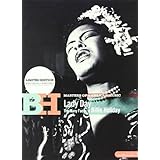
It arrived today; sure enough, it is a new issue of Lady Day, The Many Faces of Billie Holiday, with a new cover and a new lower price. However, I decided immediately to keep it, since the cover says that it is remastered, and the previously released edition was transcribed from a VHS master. In watching the first several minutes, I can confirm that, not only has it been remastered, and very nicely, it has a nicely done new menu, new graphics and subtitles in German and French.
This documentary was originally issued on Kultur Video, at a much higher price than the new release. Remastered or not, it has long been my favorite of the few documentaries or video records available on Billie Holiday. The following is my previous review of the Kultur DVD:
This documentary, released concurrently with a hard-cover book of the same name in 1991, is a brief but highly accurate overview of the life and art of Billie Holiday. The book, with text by Robert O'Meally, contains literally hundreds of rare photographs, and a good deal of these are liberally sprinkled throughout the film. But ultimately, it is the sparsely produced but flawlessly executed narrative of her life and craft that make this DVD stand out among the few biographical pieces that have been released about the great Lady Day.
The film contains interviews with several of Billie's closest friends and the musicians who worked with her. The insight provided by fellow jazz-singers and friends Carmen McRae and Annie Ross is indeed enlightening, but it is the observances of her fellow musicians, Mal Waldron, Buck Clayton and Harry "Sweets" Edison, as well as particularly eloquent comments by writer and jazz historian Albert Murray, that make this documentary particularly illuminating. There are snatches of Billie's greatest recordings, which consist of excerpts that illustrate exactly what was so unique about Lady's genius, often accompanied by explanations of what made her music so important, or perfectly timed clips of jazz audiences and dancers of the day, reveling in the music. At one point, trumpet player Harry Edison remarks that Billie was a jazz musician, in the way that she used her voice and, "attacked the words and could swing just like a trumpet player". His comment is immediately followed by a brief clip of her 1936 recording of "I Can't Give you Anything But Love" (with Teddy Wilson and his band) in which she exactly emulates the sound of that instrument with her voice. Albert Murray and Sweets Edison carefully explain, once and for all, that Billie was not a blues singer, but a jazz singer - the very best jazz singer, while Buck Clayton, Carmen McRae and Mal Waldron clarify that Billie was the first vocalist to use her voice dramatically, change the melody and phrasing of songs to fit her mood, and improvise on written music to create a form of art that was as original as it was unique. They make you understand that Billie Holiday literally influenced every singer that came after her; this film makes it possible for someone with little prior knowledge of her, or her craft, to understand exactly why she was such an important and influential figure in both popular music and jazz singing. Simply put, Billie Holiday changed the way singers sang songs, and this film articulates this fact with vivid clarity.
The film goes out of its way (as does the book) to correct some of the more glaring inaccuracies in her biography, and does not flinch from the somewhat sordid and sensational details of her tragically short and pain-filled life. At the same time, the portrait is one of someone who certainly did enjoy their life to the fullest despite tragedy, and Billie is revealed as the basically happy and cheerful (if often abused) person that she really was. Throughout we hear actress Ruby Dee read some of the more accurate portions of Billie's "autobiography" - Lady Sings the Blues, a book she didn't write, and probably never even read.
Also worthy of note are the contributions of producer Milt Gabler, who relates the story behind Billie's biggest hit, "Lover Man", which he produced for Decca Records in 1944. There is also a well-orchestrated and effective buildup to the song "Strange Fruit", the social and political aspects of which are carefully explained by Milt Gabler (who labels it, "the first important protest song"). He relates that Columbia Records refused to record it, for fear of "bad press and boycotts" by their Southern dealers. Annie Ross says, "I knew it was banned, and I knew WHY it was banned", while Carmen McRae simply states, "that was just straight up facts, you know, the way it was in those days" while they all express their admiration for Billie and her brave stance as an African American, who dared to sing a song about lynching in the pre-civil rights era of 1939. The discussion is followed by a late clip of Billie, looking absolutely radiant, singing the song before a television audience, while accompanied by Mal Waldron on piano. The expressions and drama etched on her face while she runs through the powerful lyrics, ("Southern trees bear a strange fruit, blood on the leaves, and blood at the root; black bodies swinging in the southern breeze, strange fruit hanging from the poplar trees") right through the dramatic climax, ("...for the sun to rot, for the tree to drop, here is a strange and bitter crop") make this video a potent testament to her amazing valor and artistic perfection.
There are other rare and wonderful (if much too brief) video clips of Billie Holiday at her best, and sometimes, at the stark and shocking end of her life. One clip begins with a particularly sickly, ghostly looking Billie, her appearance nothing less than alarming, but as the clip progresses we realize that poor video quality, combined with an unflattering camera angle and bad lighting, make her look far worse than she really did. A moment later the camera switches angles, and with relief we see that she is far more elegant and healthy-looking than she appears at the onset of the clip.
We also get brief scenes of her only film, New Orleans, with Louis Armstrong, made in 1947. While Billie sings the song "The Blues Are Brewin'", the close-ups give us a rare glimpse into what it must have been like to experience the real Billie Holiday; she sings the words, "...suppose you want somebody, but you ain't got nobody, you only got a gleam in your eye...", and her expressions are absolutely brilliant. There is not only a gleam in her eye, there is a wrinkle in her brow, a lilt in her gestures and contractions in her facial muscles that, all combined, communicate a range of feeling and a show of expression that lesser singers could never hope to convey. Priceless.
The climax of the film is the celebrated clip of her singing her composition, "Fine and Mellow" from the famous 1956 television special, The Voice of Jazz. Accompanied by several of her peers in the jazz world, including Ben Webster, Lester Young, Roy Eldridge and Gerry Mulligan, the cameraman wisely chose to concentrate on Billie's face, even as the soloists took their individual turns, and we get a delightful look of Billie playfully nodding her head in time with the beat, appreciation for the talents of her fellow musicians clearly showing in her eyes and motions.
Some viewers have expressed disappointment by the fact that more video clips of Billie are not presented here, forgetting that (unfortunately) there are very few video records remaining of her performances. I believe I have now seen, through this and the other available videos, most of her surviving video performances, and this film does contain some of the very best of them. But the inclusion of those few precious video clips notwithstanding, it is the explanation of Billie's art and the clear articulation of her genius that make this documentary so gratifying.
As the film closes on the story of her life, Albert Murray comments that, in the end, it is, "the eloquence, the universality of her statement that matters" most, while Carmen McRae reflects that, although much of Billie's voice was gone by the time she recorded "Lady in Satin", there was something about her voice, even then, that could evoke intense feeling, and Miss McRae says she still plays that album, and cries. Over the credits, we hear a few bars of "I'm A Fool To Want You" from Lady in Satin, and we instantly know exactly why Carmen McRae found it so moving.
Highly recommended.
Click Here to see more reviews about: Masters of American Music: Lady Day - The Many Faces of Billie Holiday (2009)
 Get 18% OFF

0 comments:
Post a Comment